
Introduction
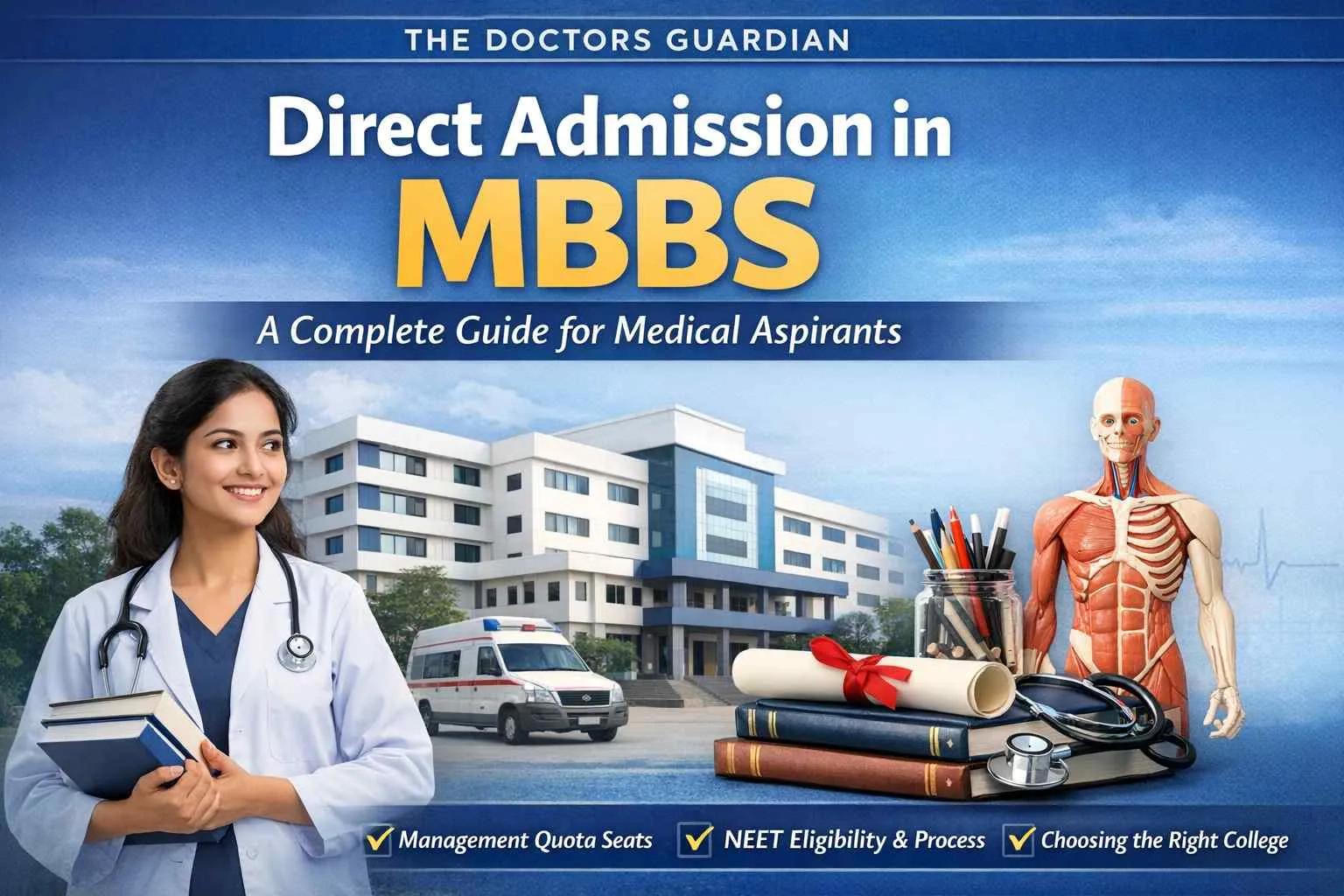
Pursuing an MBBS degree is a dream for many students who aspire to build a career in the medical field. However, due to the intense competition for medical seats in India, securing admission through the regular merit-based counselling process can be challenging for many qualified candidates. This has led students and parents to explore the possibility of direct admission in MBBS through private medical colleges and deemed universities.
Direct admission in MBBS generally refers to obtaining a seat through management quota or NRI quota in recognized medical institutions. While the term “direct admission” is commonly used, it is important to understand that qualifying the NEET examination remains mandatory for all MBBS admissions in India. No medical college can legally admit a student without NEET qualification.
Understanding Direct Admission in MBBS
Direct admission does not mean admission without an entrance examination. Instead, it refers to admission through specific quota seats where the cutoff marks may be relatively lower compared to government quota seats. These seats are typically available in private medical colleges and deemed universities that offer a certain percentage of seats under management or NRI categories.
Students who qualify NEET but may not achieve a high enough rank for government medical colleges often consider this pathway to pursue their medical education.
Eligibility Criteria
To obtain direct admission in MBBS, students must meet the standard eligibility requirements set for medical education in India.
Candidates must have completed their 10+2 education with Physics, Chemistry, and Biology as core subjects. They must also have studied English as a compulsory subject. The minimum qualifying marks generally required are 50 percent for general category students and 40 percent for reserved category students.
In addition to academic eligibility, students must qualify the NEET examination and meet the minimum percentile specified for the year of admission. The minimum age for MBBS admission is 17 years as of 31 December of the admission year.
Types of Colleges Offering Direct Admission
Direct admission opportunities are primarily available in private medical colleges and deemed universities. These institutions reserve a portion of their total MBBS seats under management quota and NRI quota categories.
Private medical colleges are located in various states across India and often provide modern infrastructure, advanced laboratories, and affiliated teaching hospitals for clinical training.
Deemed universities also offer MBBS programs and admit students through centralized counselling processes. These institutions often attract students from different parts of the country due to their academic facilities and national-level admission system.
Admission Process
The process of securing direct admission in MBBS usually begins with appearing for the NEET examination. Once the results are declared, students must register for the relevant counselling process depending on the type of college they wish to apply to.
During counselling, students can select their preferred colleges and courses. Based on their NEET score, category, and seat availability, they may receive allotment under management quota or NRI quota seats.
After seat allotment, candidates must complete document verification and pay the required tuition fees to confirm their admission. Proper documentation and timely participation in counselling are important for securing a seat successfully.
Fee Structure
The fee structure for direct admission in MBBS is generally higher than that of government medical colleges. Private medical colleges charge significantly higher tuition fees because these seats are not subsidized by the government.
Fees may vary depending on the college, location, and quota category. In addition to tuition fees, students should also consider expenses related to hostel accommodation, security deposits, examination fees, and other academic charges.
Understanding the complete fee structure before taking admission is essential to avoid financial difficulties during the course duration.
Important Considerations
Students and parents must verify that the medical college is properly recognized and approved to offer MBBS programs. Choosing a reputable institution with adequate hospital facilities and clinical exposure is crucial for quality medical education.
It is also important to participate only in official counselling processes conducted by authorized bodies. Students should avoid unofficial or unverified admission offers that promise MBBS seats without proper procedures.
Careful planning, research, and guidance can help students choose the right medical college and complete the admission process smoothly.
Conclusion
Direct admission in MBBS provides an opportunity for students who qualify NEET but may not secure seats in government medical colleges due to intense competition. Through management quota and NRI quota seats in private medical colleges and deemed universities, aspiring doctors can still pursue their medical education.
With the right information and responsible decision-making, students can select suitable institutions and move forward toward a rewarding career in medicine. The journey to becoming a doctor requires dedication, commitment, and proper guidance, but with the right path, it remains an achievable goal for many aspiring medical professionals.